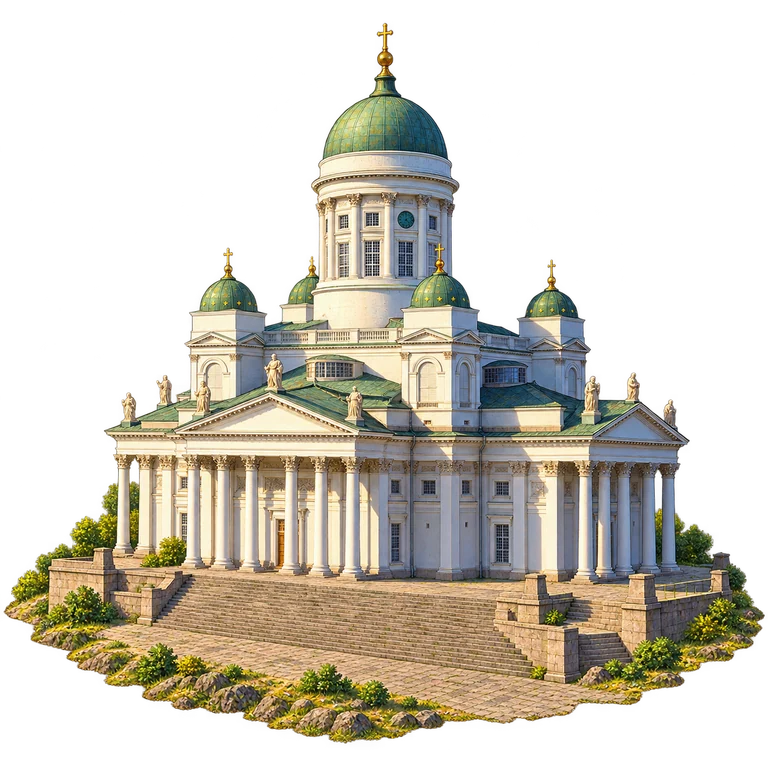
Carl Ludvig Engel designed Helsinki Cathedral as a Greek-cross church, with arms arranged around its central space. The church was consecrated in 1852. After Engel’s death, Ernst Lohrmann completed the design and added the four smaller domed towers that now accompany the large central dome. The building’s changing names also reflect Finland’s history: it became Helsinki Cathedral when the diocese was established in 1959. This exterior miniature presents a living place of worship, without inventing a ceremony inside.
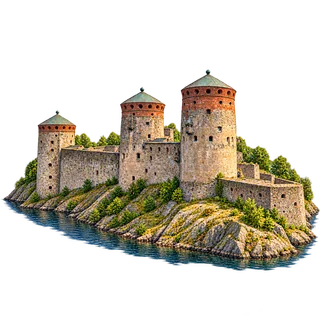
Erik Axelsson Tott founded Olavinlinna in 1475 on a rocky islet. The fortress stood near a contested frontier, and later changes in power and military technology altered its fabric. Its surviving round towers and thick connecting walls tell a layered story rather than preserving every part of the original design. The miniature follows the current three-tower exterior. It does not restore lost towers or supply a newly imagined medieval approach bridge.
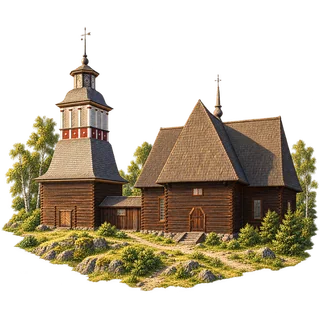
Local land-owning peasants built Petäjävesi Old Church in 1763–65 under master builder Jaakko Klemetinpoika Leppänen. Their log construction and steep shingled roofs turn familiar materials into an expressive church. In 1821, Leppänen’s grandson Erkki added the belfry and its connecting passage. A newer church later took over everyday use, but the old building was never decommissioned and still hosts services and life events. Its story combines continuing local care with distinctive wooden architecture.
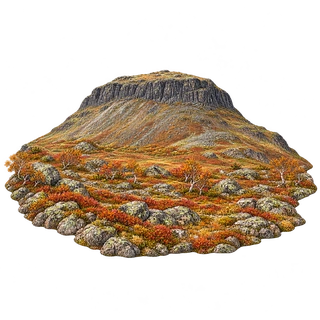
Saana forms part of the high-fell landscape around Kilpisjärvi. Exposed rock shapes its broad upper profile, while the surrounding landscape combines open fells and mountain birch. The area brings together distinctive northern landforms and protected natural habitats.
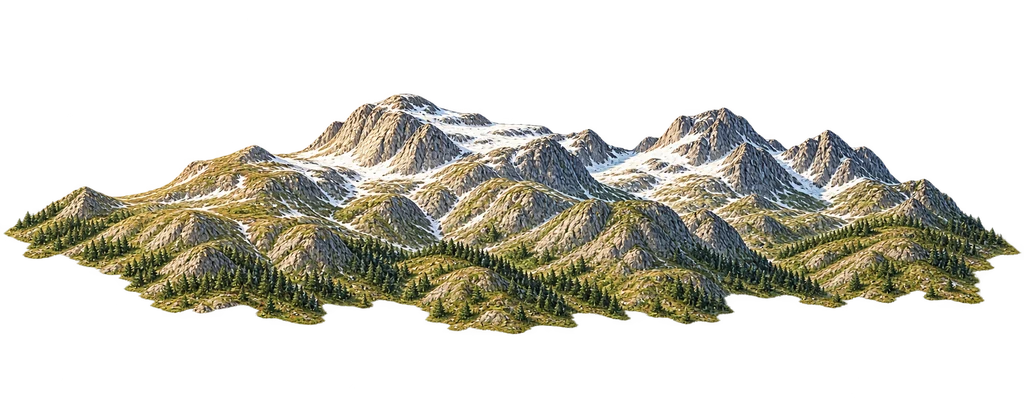
The Scandinavian Mountains extend along the western side of the Scandinavian Peninsula. The artwork uses northern rock, snow and broad highland shoulders.
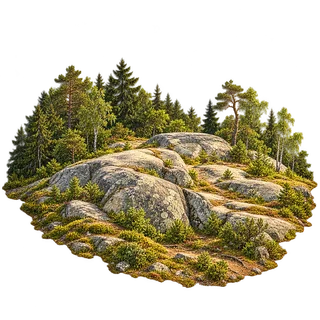
Ukko-Koli is the highest of Koli’s familiar summit viewpoints, marked at 347 metres on Metsähallitus’s trail map. From the rocky heights, the forested hills and island-filled waters of Lake Pielinen form one of Finland’s best-known national landscapes. The park’s trail material also explains how nearby rocks record a long geological history. The distant lake panorama is intentionally left outside its finite, terrestrial composition.