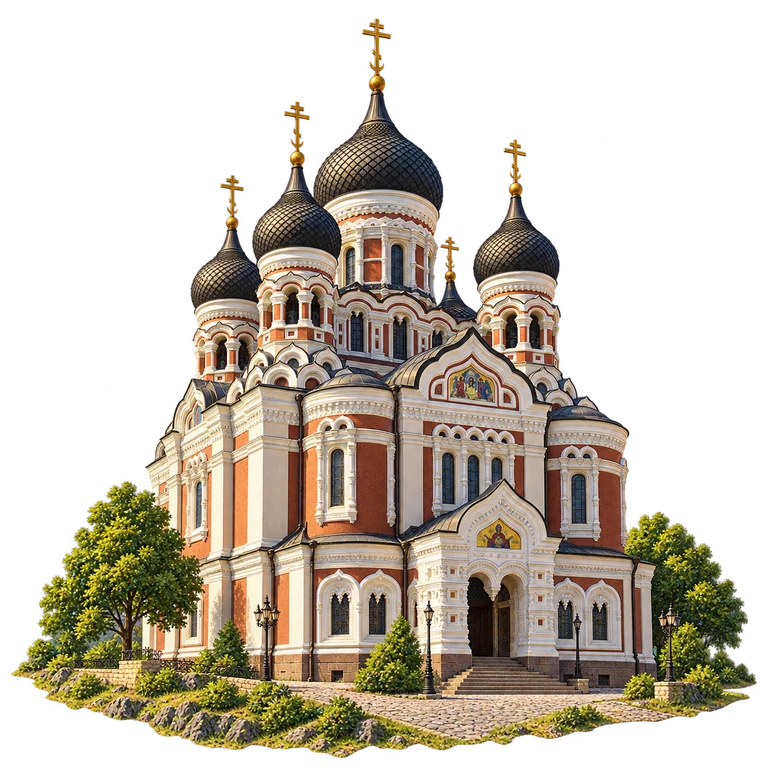
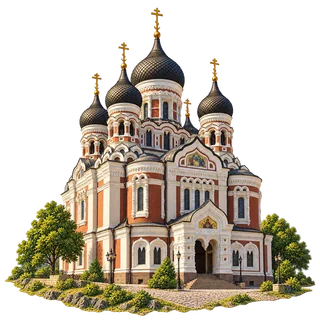
Completed in 1900, Alexander Nevsky Cathedral belongs to a difficult chapter of Tallinn’s history. It was built during the Russian Empire’s Russification policy, opposite Toompea Castle, and its prominent position expressed imperial power. It is also a living Orthodox place of worship. The exterior’s five onion domes, patterned masonry and mosaic panels make it distinctive.
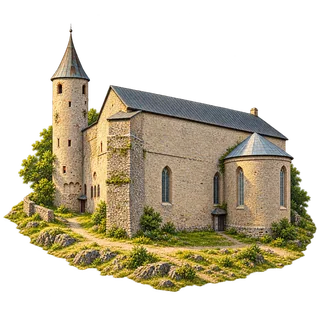
Haapsalu’s castle and cathedral grew from an episcopal centre founded in the second half of the thirteenth century. Their joined religious and defensive roles help explain why a church stands inside a fortified complex. A late-seventeenth-century fire changed the castle’s later history, while the surviving cathedral and cellars are part of today’s museum experience. The scene follows the long stone church, adjacent round tower and curved baptistery visible in the reference, rather than rebuilding a complete medieval fortress.
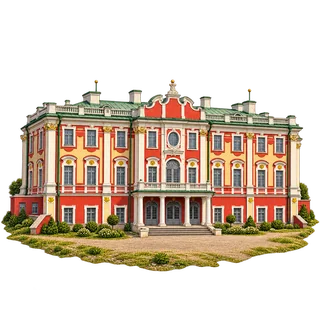
Work on Kadriorg Palace began in 1718 for Peter I, during Russian imperial rule. The Italian architect Nicola Michetti shaped its Baroque design, and the palace was named for Catherine I. Its later uses tell a different story: in the 1930s it became a residence of Estonia’s head of state. Restored as an art museum, it reopened in 2000. The miniature concentrates on the central block, keeping the wider gardens and separate estate buildings outside the scene.
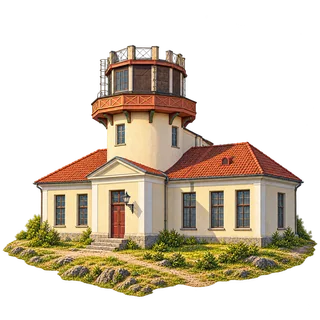
Tartu’s old observatory connects looking into space with measuring the Earth. Its museum presents astronomy, geodesy and seismology, and marks a measurement point of the Struve Geodetic Arc on the lobby floor. That arc links observations across a large part of Europe to investigate the Earth’s size and shape. The restored observatory opened as a museum in 2011. Its modest roof cabin and low wings make a different scientific landmark from a modern mountain observatory with a giant hemispherical dome.
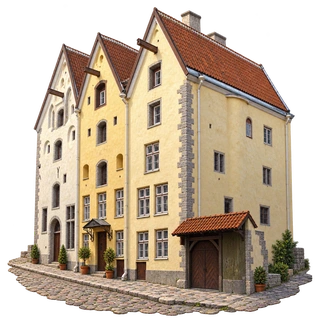
The Three Sisters are medieval merchant houses on Pikk Street in Tallinn. Their joined street facades connect the city’s trading history with its surviving built environment. Steep gables and varied facades give the group its distinctive character.