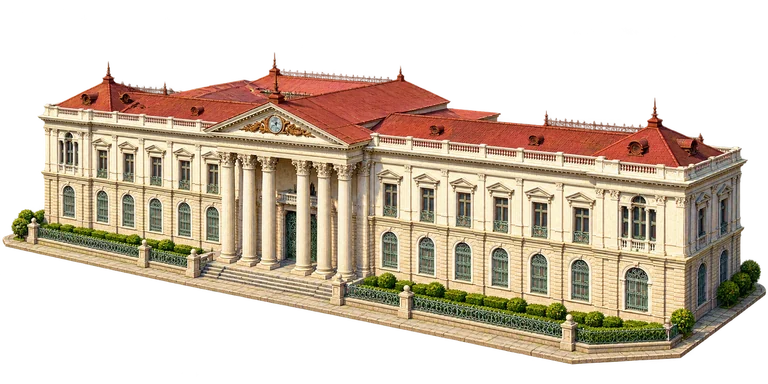
San Salvador’s present National Palace opened in 1911. The building once housed the executive, legislature and judiciary, with different principal rooms associated with their work. Its architecture combines neoclassical features with other influences: a broad ordered facade, columned portico and rooms arranged around a central courtyard. Looking at the exterior offers a way into the history of civic buildings without confusing an imposing setting with the people who used it.
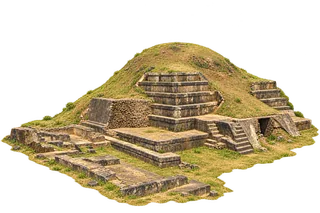
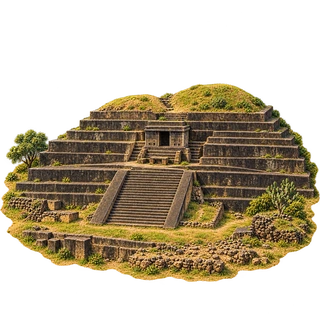
San Andrés was an important pre-Hispanic centre in El Salvador’s Zapotitán Valley. Its Acropolis includes a raised platform and a group of structures built and altered over time. Structure 1 preserves part of that architectural story in exposed stepped surfaces and earth-covered remains. Comparing the visible masonry with the unexcavated-looking mound helps show why an archaeological site is more than a row of complete reconstructed temples.
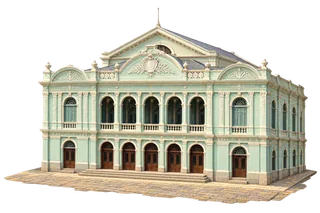
Santa Ana’s National Theatre grew from a project begun with its foundation stone in 1902. Salvadoran craftspeople and Italian artists contributed to its architecture and decoration. The Ministry of Culture describes a neo-Renaissance exterior with two levels, arcades and three semicircular pediments. This is a building made for gathering and performance, with a carefully composed facade that turns the approach to a theatre into part of the occasion.
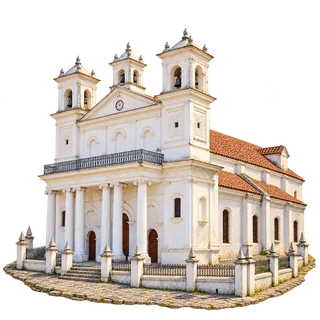
Santa Lucía Church stands beside Suchitoto’s central square. The national tourism account dates its construction to the nineteenth century. A white front, classical columns, iron balcony rail and three small upper bell structures create a layered silhouette above the tiled nave. Its position beside the square makes the church part of a lived town centre, rather than an isolated monument separated from everyday streets and meeting places.
Tazumal sits within the wider archaeological landscape of Chalchuapa in western El Salvador. Visible monumental structures and less visible domestic areas preserve evidence of a community influenced by connections with other Mesoamerican peoples. The site's role during the Classic period forms one part of Chalchuapa's much longer history of occupation.