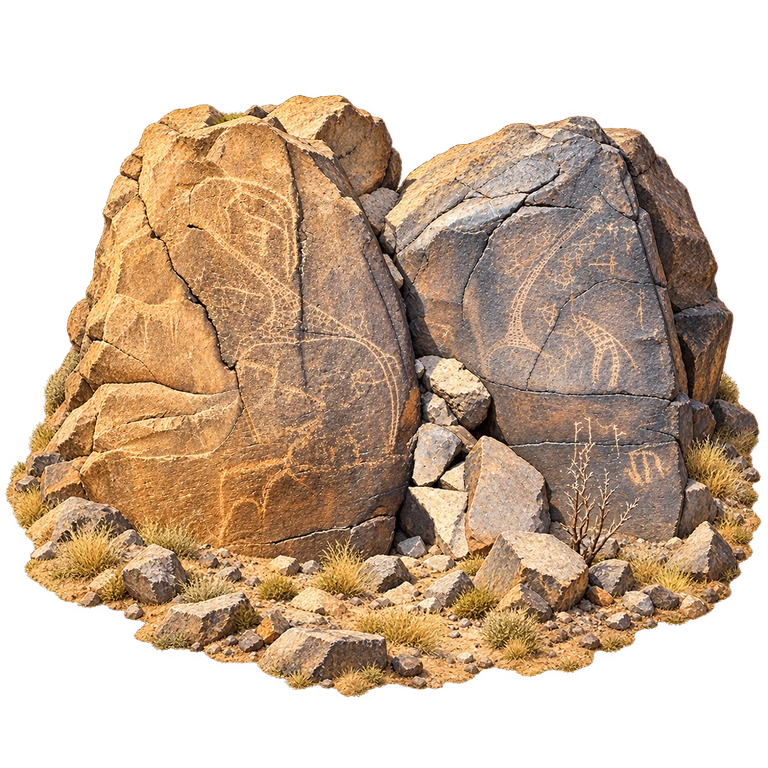
At Abourma in Djibouti's Makarrassou massif, rock surfaces carry many engravings of wild animals, domestic animals and human activities. Differences in subjects and styles record a long sequence of image-making. The images offer evidence for interpreting changing relationships between people, animals and their environment, while requiring care about uncertain dates and meanings.
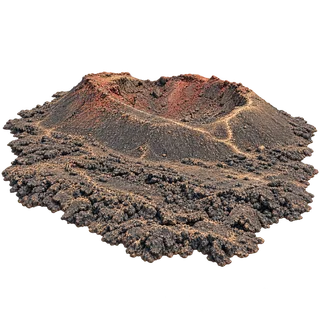
Ardoukoba formed during a brief eruption in November 1978. Its low scoria cone stands amid black lava in Djibouti’s rift landscape. Look for the irregular crater rim and reddish rubble rather than the perfect cone of a textbook volcano.
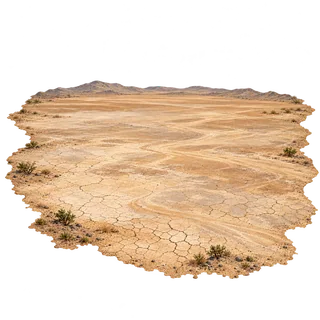
Grand Bara is a broad dry plain of pale clay. Its cracks and subtle surface lines tell a quieter geological story than Djibouti’s volcanoes. Heat can create mirages across this open landscape, but the ground here is dry.
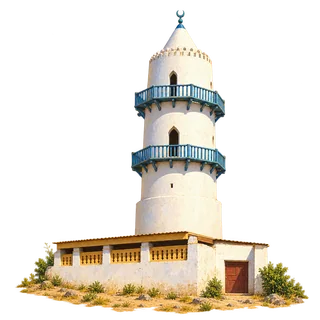
The minaret of Hamoudi Mosque is a familiar landmark around Place Mahmoud-Harbi. Its white cylindrical stages rise through two blue-railed balconies to a small pointed crown.
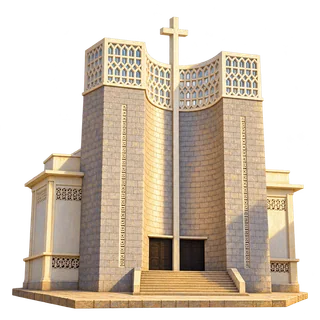
Djibouti’s Notre-Dame-du-Bon-Pasteur Cathedral was consecrated in 1964, replacing the earlier Saint Joan of Arc church. Its concave facade, tall central cross and geometric openwork screen make a distinctive modern silhouette.