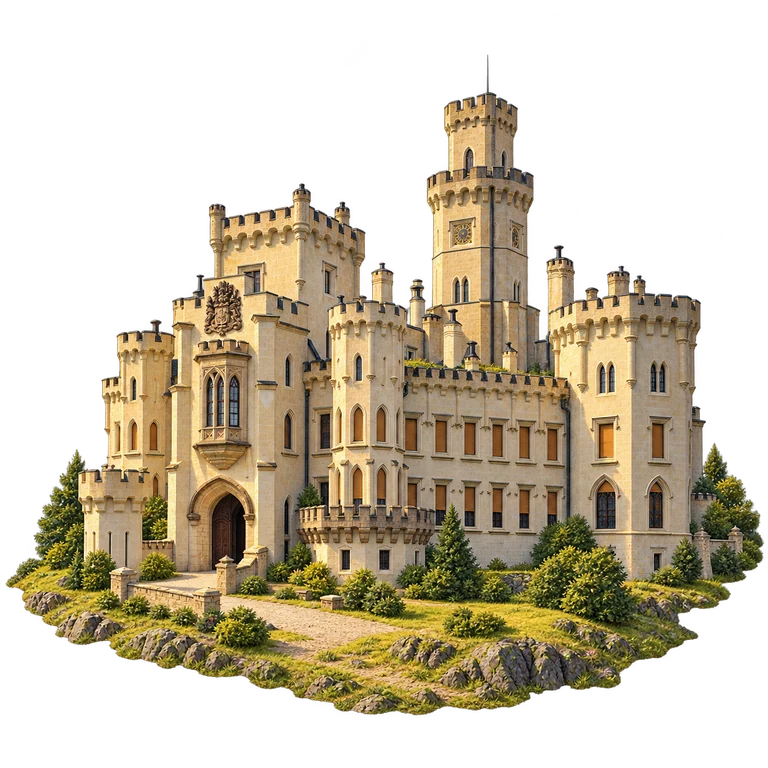
Hluboká has medieval origins, but its current appearance comes largely from a nineteenth-century transformation. The Schwarzenbergs’ travels in England helped inspire a redesign associated with Windsor Castle. Work between 1840 and 1871 replaced earlier forms with the pale walls, crenellations and Gothic-inspired details familiar today. The building is therefore a useful reminder that a castle’s appearance can express a later idea of the past.
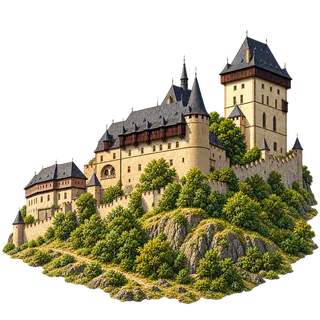
Charles IV founded Karlštejn in 1348. The castle became a place for royal treasures, holy relics and crown jewels, with different spaces arranged through its rising complex. The Great Tower’s Chapel of the Holy Cross was consecrated in 1365. Its commanding position helps explain why the tower dominates the skyline. The miniature follows the present stepped castle exterior and its connected walls. It does not turn the complex into a symmetrical fantasy palace or promise that every visible fabric dates to Charles IV.
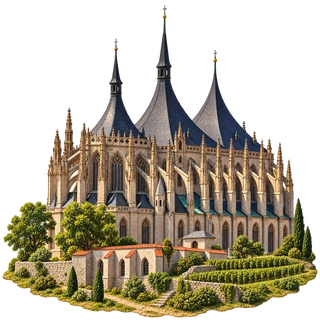
Kutná Hora grew through the exploitation of silver mines and became a royal city in the fourteenth century. Its prosperity found expression in buildings such as the late Gothic Church of St Barbara. Medieval streets and houses preserve the setting around these monuments, linking urban architecture to a mining economy.
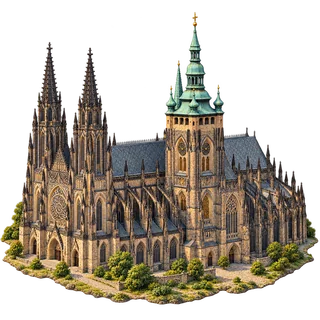
Construction of the present Gothic cathedral began in 1344, but its completion and consecration came in 1929. That long history helps explain the different forms along its exterior. The paired western spires contrast with the great south tower’s green Baroque cap. The cathedral has also been a setting for royal coronations and burials.
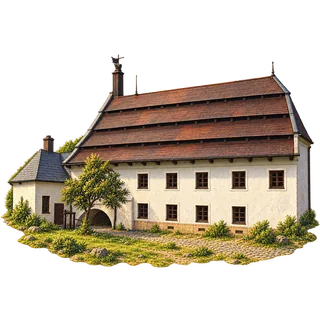
The paper mill at Velké Losiny was established between 1591 and 1596 on the site of an older grain mill. A surviving early watermark bears the date 1596. Its buildings acquired their later Baroque and Classicist form around the end of the eighteenth and beginning of the nineteenth century. Hand papermaking using cotton and flax continued despite industrial competition. The miniature focuses on the long mill building and its distinctive drying roof, rather than inventing a giant exposed waterwheel.