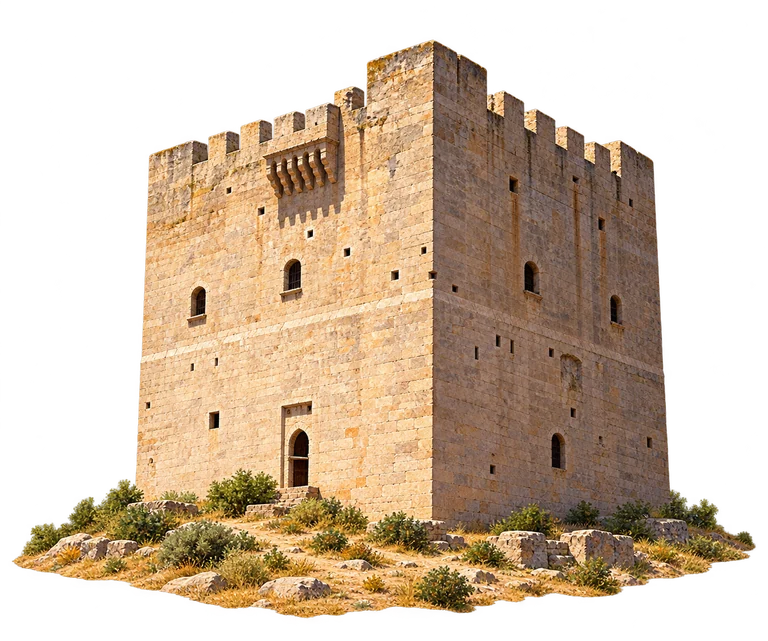
Kolossi Castle is a recognisable example of medieval military architecture in Cyprus. Its plain limestone walls, small openings and battlemented roof give the keep a strong, simple outline. The surviving tower stands near Limassol, separate from the island's coastal archaeological sites.
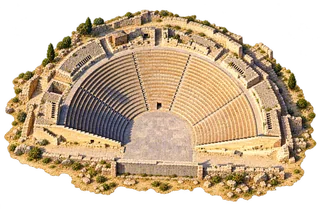
The Greco-Roman theatre is one of Kourion's most recognisable monuments. Its seating rises in curved tiers above the orchestra area. Restored for use today, the theatre links the ancient city with modern cultural performances.
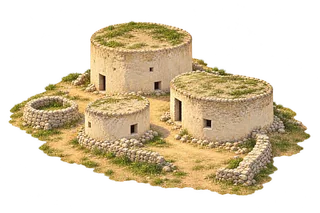
Choirokoitia is an important Neolithic archaeological site in Cyprus. Reconstructed cylindrical houses show how stone walls, small entrances and earthen roofs could form a compact home. These modern reconstructions help explain the ancient remains without pretending the standing houses are untouched prehistoric buildings.
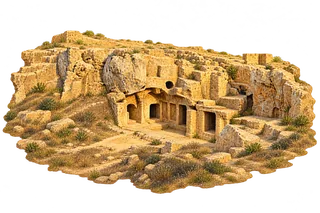
The Tombs of the Kings preserve substantial rock-cut burial architecture near Paphos. Some tombs were shaped to resemble houses, with chambers opening around courts. Their grand appearance gave the site its memorable name, while the photographed entrance reveals the texture of the rock itself.
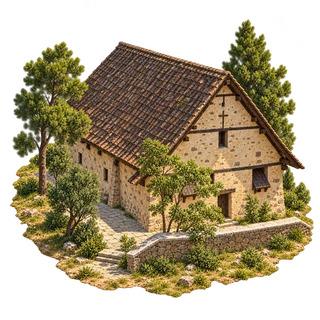
St Nicholas of the Roof belongs to the painted churches of Cyprus's Troodos region. Its surviving wall paintings include eleventh-century iconography and works from the Comnenian era. Alongside the other listed churches, it helps trace Byzantine and later painting traditions through buildings whose rural exteriors can conceal elaborate interiors.