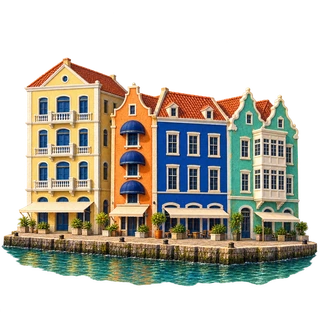
Handelskade brings a splash of colour to Punda, the historic heart of Willemstad. Its Dutch-influenced facades look out over the harbour, with cafés and shops tucked beneath the roofs.
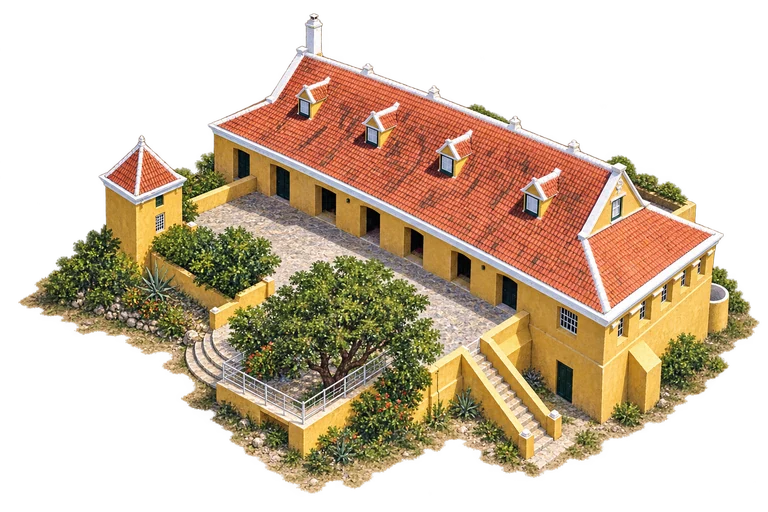
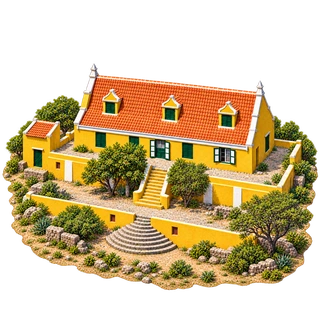
Landhuis Knip, also called Kenepa, is remembered for the 1795 uprising against slavery led by Tula. Enslaved people refused forced work here before the resistance spread beyond the plantation. The surviving house has a rectangular core surrounded by galleries, with four dormers on each side of its high tiled roof. Alterations and restorations have shaped its present appearance. Its architecture belongs to a history that includes both colonial power and the people who resisted enslavement.
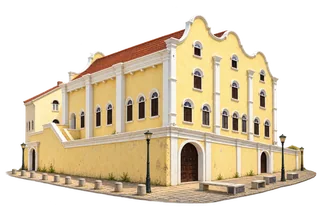
Willemstad's Mikvé Israel-Emanuel Synagogue was consecrated in 1732. Its yellow walls and white-edged gables stand above a prayer hall whose floor is covered with sand. The interior drew inspiration from the Portuguese synagogue in Amsterdam, reflecting connections across the Atlantic. Known locally as the Snoa, it remains a place of worship as well as a landmark of Curaçao's Jewish heritage. The adjacent museum offers another way to explore that history.
Savonet Museum occupies a former plantation house, or landhuis, within Christoffelpark. Its interpretation uses artefacts, photographs and accounts connected with former inhabitants, including descendants of enslaved people. The museum links cultural and natural history, asking how people and the surrounding environment have shaped one another over time.