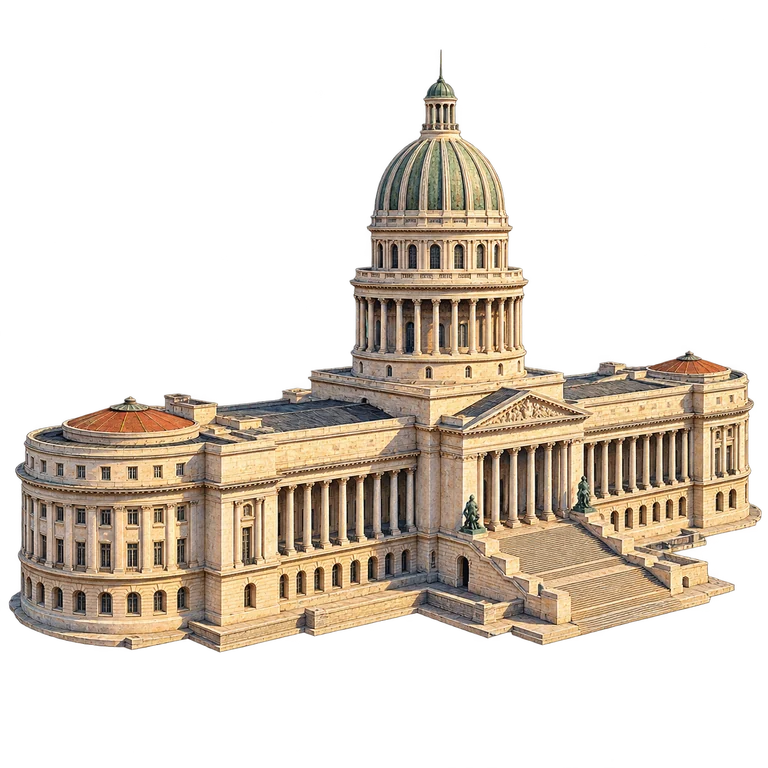
The Capitolio marks kilometre zero for Cuba’s road network. Long colonnaded wings lead the eye toward its central stair and dome. This neoclassical landmark connects a monumental city building with the journeys measured outward across the country.
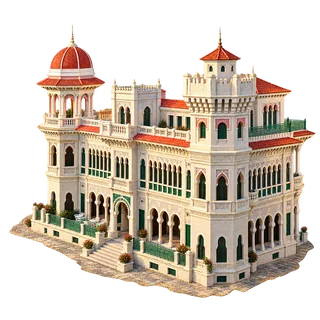
Completed in 1917, Palacio de Valle stands in Punta Gorda. Its elaborate arcades and contrasting rooftop structures combine several revival styles. The villa’s dense ornament offers a different view of Cienfuegos from the ordered streets around its central square.
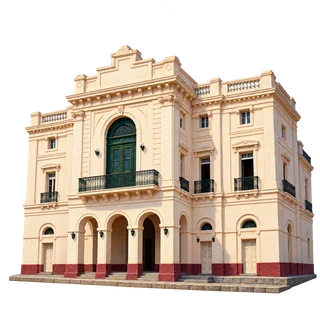
Marta Abreu’s donation made Teatro La Caridad possible, and it opened in 1885. Its purpose linked performance to beneficence and public instruction. The pale street front and central balcony introduce a building whose history reaches beyond the stage into Santa Clara’s civic life.
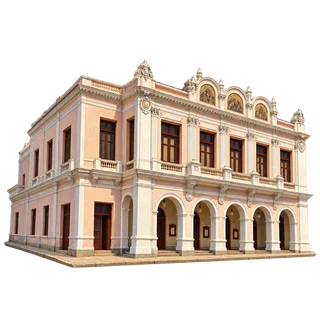
Opened in 1890, Teatro Tomás Terry is a landmark of Cuba’s nineteenth-century stage. Its long arcaded front faces Parque José Martí. Performances and decorative interiors are part of its history, while the three curved rooftop panels distinguish its street silhouette.
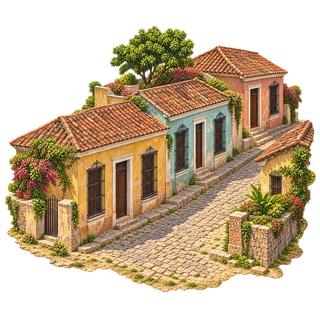
Trinidad's eighteenth- and nineteenth-century buildings reflect wealth from the sugar trade. The nearby Valley de los Ingenios preserves plantation and mill remains linked to that economy and to enslaved labour. Reading the town alongside the valley reveals how architecture, production and coercion were connected.