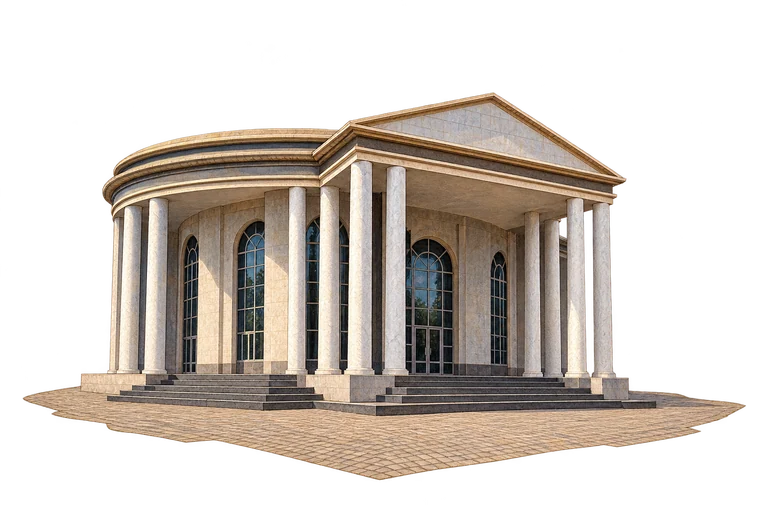
The Pierre Savorgnan de Brazza Memorial is a cultural and commemorative site in Brazzaville. Its central building houses the remains of the explorer after whom the city was named and includes exhibition space. The circular hall and classical portico make a recognisable landmark in the capital.
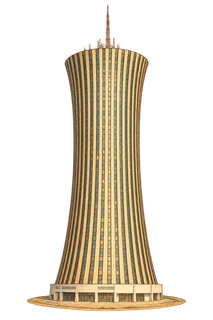
Nabemba Tower is one of Brazzaville's recognisable modern buildings. Its cylindrical form narrows around the middle and widens toward the top, while pale ribs alternate with dark window strips. The tower adds a very different silhouette to the capital's older stone and tiled landmarks.
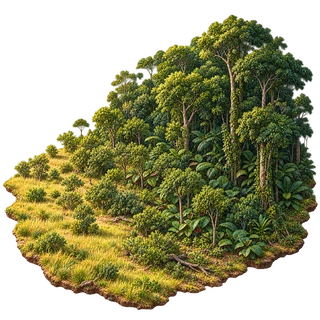
Odzala-Kokoua contains forests at different stages of development, offering evidence of forest expansion over savanna since the last glacial period. Marantaceae plants form a major part of this changing vegetation. Studying the mosaic helps explain how habitats develop over time, rather than treating rainforest as an unchanging green surface.
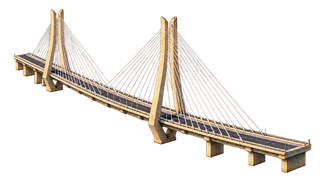
The Pont du 15 Aout 1960 forms a distinctive part of Brazzaville's riverside Corniche. Tall concrete pylons and fans of stays support its curving deck. The name recalls the date of the Republic of Congo's independence, while the structure belongs to the modern city's transport network.
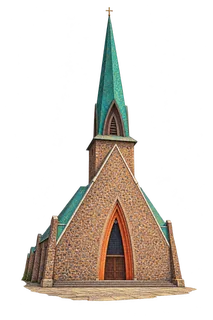
The Basilica of Sainte-Anne-du-Congo is recognised for its distinctive green tiled roof and spire. Its tall pointed entrance and rough stone walls give the front a striking vertical rhythm. It is one of the capital's named architectural landmarks.