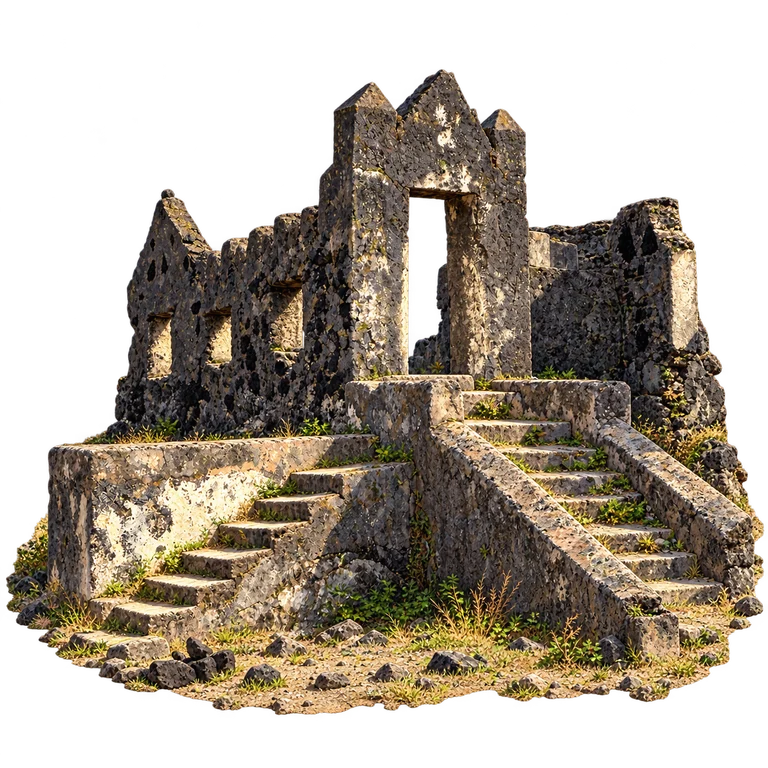
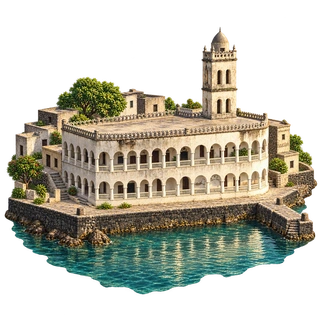
The palace of Kapviridjohe, also spelled Kavhiridjewo, survives in the historic town of Iconi on Grande Comore. The national tourism office identifies it as a former royal residence and political centre. Its remaining stone walls and steps offer a compact way to explore the architectural heritage of the Comorian sultanates.
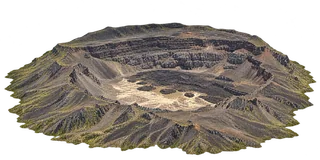
Karthala is a shield volcano on Grande Comore, also known as Ngazidja. Repeated collapse has produced overlapping summit calderas, where steep layered walls surround volcanic floors. This summit view focuses on the bare crater landscape: broken rock, talus and solidified lava preserve traces of change within the larger volcano. Its broad form contrasts with the sharp mountain peak that people sometimes imagine when they hear the word volcano.
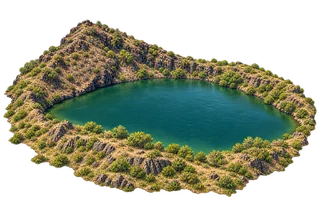
Lac Sale is a named crater lake in northern Grande Comore. A rocky rim encloses its water, while the nearby Indian Ocean gives the setting a striking coastal context. The national tourism office describes changes in the lake's apparent colour with the weather. Looking across the bowl brings its volcanic shape into focus: low scrub and exposed rock surround a body of water held within the crater.
Moroni forms part of a group of historic Comorian medinas shaped by migration and Indian Ocean trade. Their stone houses, public squares and closely arranged streets reflect local social organisation as well as connections with the Swahili and Arab worlds. These are living urban traditions, rather than archaeological remains of an abandoned society.
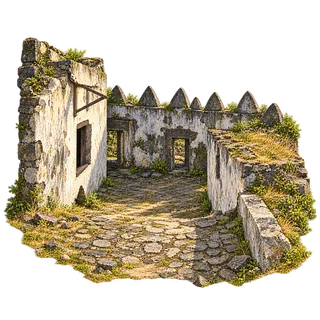
The citadel is part of Mutsamudu’s historic built heritage on Anjouan. Within its weathered walls, rough paving and pointed parapet shapes give this courtyard a distinctive character. Heritage work by the Collectif du Patrimoine des Comores connects the site with conservation and local cultural life.