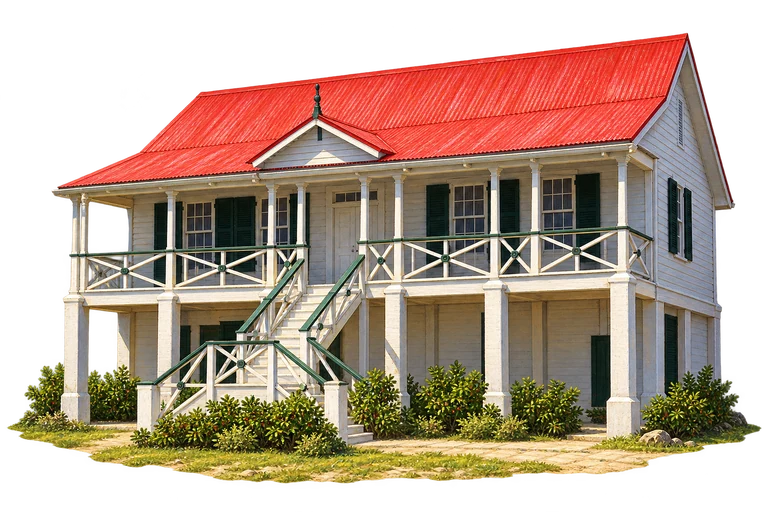
Climb the outside stair in your imagination and look along the upper veranda. This historic building now houses the Cayman Islands National Museum, where the islands’ natural and cultural histories meet. Its shutters, timber walls and shaded porch are part of the story before you even enter.
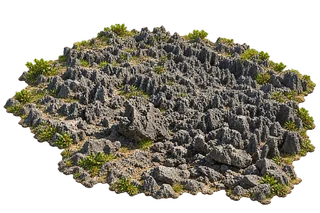
Look into the pits and crevices between the sharp stone fins. Hell is the unusual name of a real limestone formation, where dark eroded rock breaks through the surrounding vegetation. Its dramatic appearance belongs to the island’s geology, not to a volcano or a ruined city.
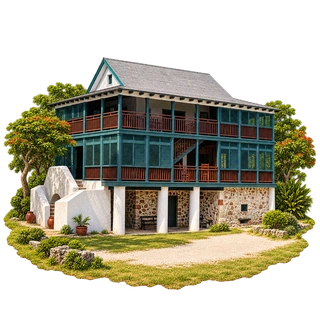
Pedro St. James was built in the eighteenth century using enslaved labour from Jamaica. Its unusually large three-storey form contrasted with the smaller houses around it. Government restoration in the 1990s preserved the Great House as a place for interpreting Caymanian history through the building and its surviving objects.