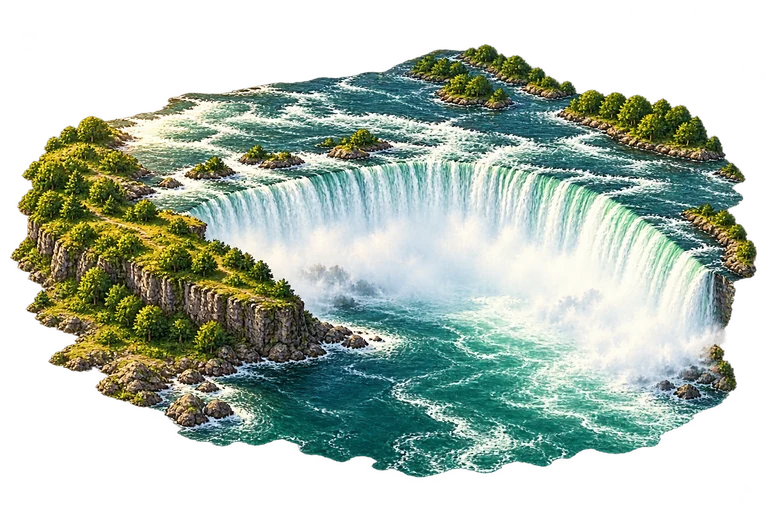
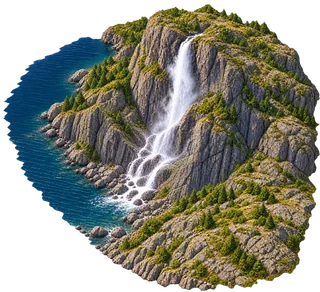
The Horseshoe Falls is the deeply curved cataract in the Niagara River, distinct from the straighter American Falls. Niagara Parks gives an average drop of 57 metres and a crest line approximately 670 metres wide. Rapids gather above the brink, while spray often softens the view into the lower gorge.
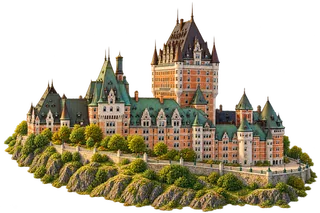
Château Frontenac was developed for the Canadian Pacific Railway beginning in 1892–1893. Later wings and a central tower enlarged its striking silhouette. Its brick, stone, steep roofs and turrets belong to the Château-style hotel tradition, rather than to a surviving medieval fortress.
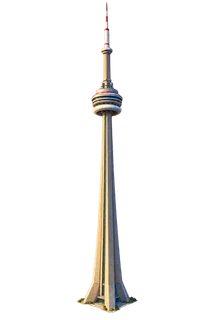
Canadian National built the CN Tower to carry broadcast signals above Toronto's growing skyline. Construction began in 1973, and it opened to the public in 1976. Its tapering concrete shaft supports a broad main observation pod, a much smaller upper viewing level and the antenna above.
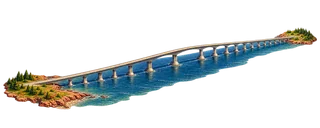
Confederation Bridge opened in 1997, replacing the ferry link with a fixed crossing. Its operator gives its curved length as 12.9 kilometres. The low concrete structure, repeated piers and raised navigation section are quite different from a suspension bridge.
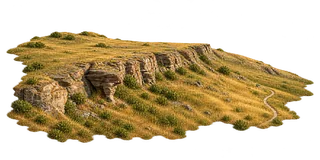
For thousands of years, Plains peoples used the landscape at Head-Smashed-In to help sustain their communities. Drive lanes led towards the cliff, and bison supplied food, clothing, shelter and tools. The site lies in the Porcupine Hills of Alberta and is important to Blackfoot heritage.
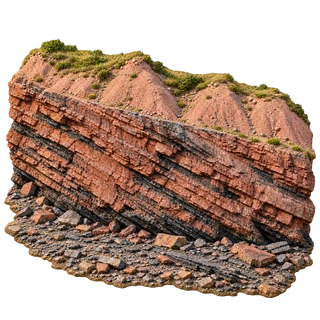
At Joggins in Nova Scotia, fossil-bearing cliffs record Carboniferous ecosystems. Plant remains, animal fossils and tracks help researchers reconstruct forests, floodplains and waterside habitats. Upright fossil trees are among the evidence preserved in the rock, making the cliffs an important archive of life on land.
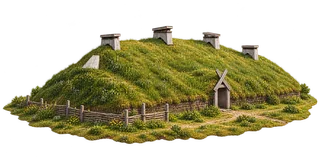
Norse expeditions built a timber-and-sod camp at L'Anse aux Meadows more than 1,000 years ago. Archaeological remains and artefacts provide evidence of that occupation. The nearby modern reconstructed buildings help visitors imagine the structures; they are distinct from the original excavated foundations.
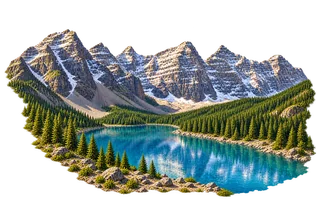
Moraine Lake lies in Banff National Park, beneath the Valley of the Ten Peaks. From its northern end, the view brings together a boulder shore, conifer-covered slopes and a wall of pale layered peaks. The contrast between rock, forest and blue-green water gives the scene its distinctive character.
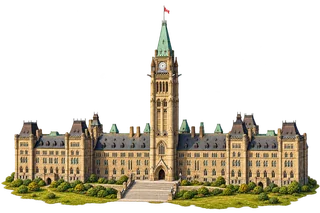
The Peace Tower stands 92.2 metres high on Parliament Hill in Ottawa. Four clock faces mark its sides, and its carillon contains 53 bells. The tower is part of Centre Block; the official account describes the clock and carillon as undergoing restoration during the current Centre Block project.
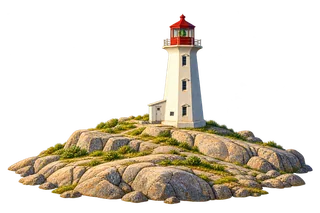
The reinforced-concrete lighthouse at Peggys Point was built in 1915. Its tapered octagonal walls, flared platform and red lantern make a compact silhouette against the granite coast of Nova Scotia. Parks Canada's heritage description draws attention to this simple form and its setting.
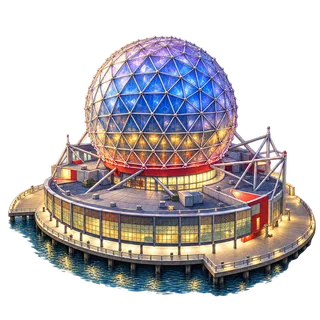
Built for Expo 86, the dome became a lasting home for Science World. Its triangular framework makes a rounded silhouette above the waterfront science centre.