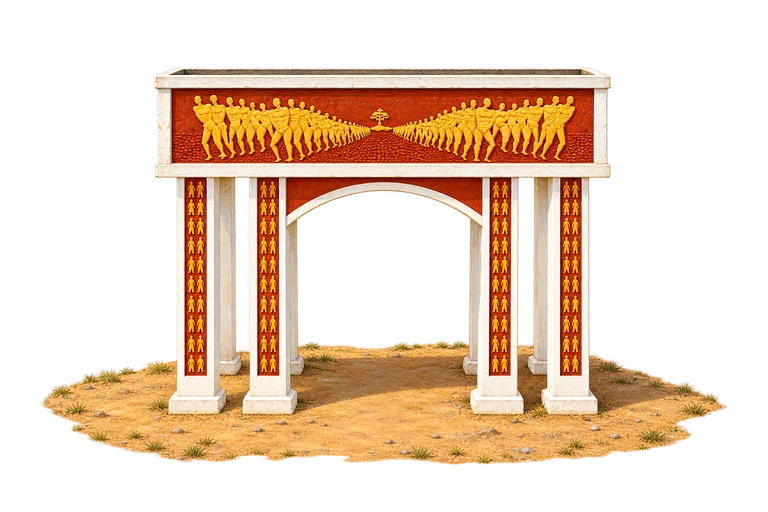
The Door of No Return is a place of remembrance at the coast of Ouidah. Its sculpted figures evoke people deported through the transatlantic slave trade. First erected in 1995, the memorial was rebuilt and enlarged in 2025. This picture follows the restored form published by Benin's tourism authority.
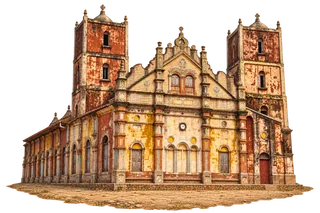
The historic Great Mosque brings Afro-Brazilian architecture to Benin's capital. Returning Aguda communities carried building skills and visual traditions across the Atlantic. Look for square towers and a layered baroque gable: this mosque's facade recalls another shore.
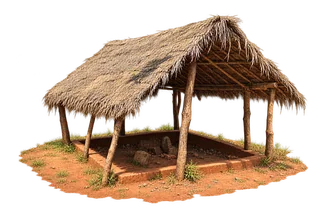
Honme Museum occupies a former palace in Porto-Novo. Its courtyards offer a quieter way to explore the royal history of the city. This small open shelter draws attention to ordinary materials: rough wooden posts, a thatched roof and red earth.
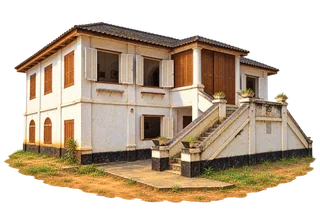
The Portuguese Fort is one of Ouidah's places of memory connected with the transatlantic slave trade. Its museum setting invites visitors to learn about that difficult history. The white house, wooden shutters and broad exterior stairs are a small part of a much larger human story.
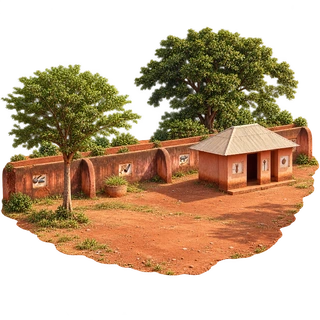
Successive kings of Abomey built palace compounds using established arrangements of space and materials. Most lay within a shared earthen-walled area, while King Akaba had a separate enclosure. The surviving ensemble preserves evidence of the kingdom's royal architecture and political history.