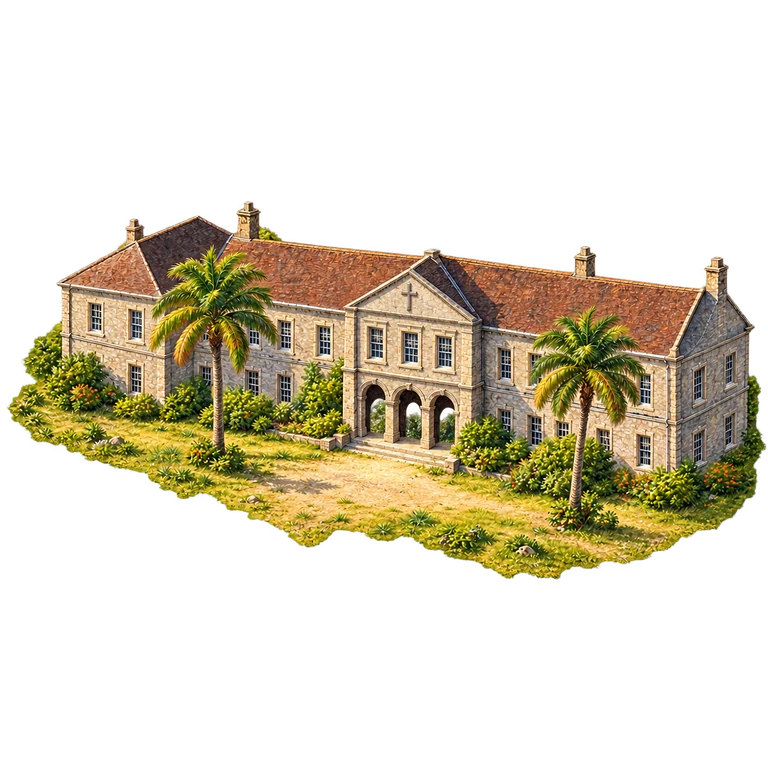
Codrington College began as a grammar school in 1745 and later developed into a collegiate institution. Its history is inseparable from the plantation endowment and the labour of enslaved people that supported it. Today its stone main building remains a distinctive place of learning in Barbados.
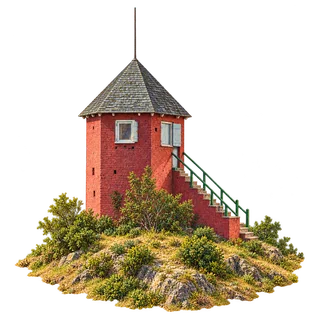
Gun Hill Signal Station was built in 1818 as part of a colonial signalling network. Alongside its security role, signals conveyed shipping news, meeting notices and hurricane warnings. The National Trust restored the station in 1982; its red polygonal tower remains a distinctive landmark.
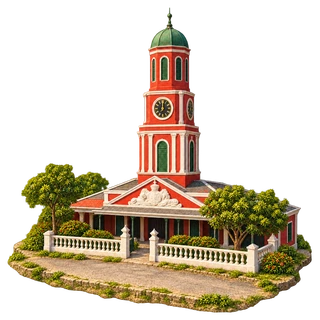
Bridgetown's historic streets follow an irregular pattern rather than a rigid grid. Its port, warehouses and nearby garrison record the expansion of Britain's Atlantic empire. That history includes sugar trading and the trafficking of enslaved people, alongside the cultural exchanges that shaped the town and its architecture.
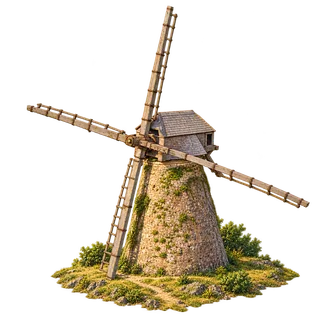
Morgan Lewis preserves a wind-powered sugar mill and its grinding machinery. The site records a technology once central to Barbados’s sugar economy, an economy shaped by plantation slavery. Its tapering stone tower and timber sails make the preserved machinery visible from outside.
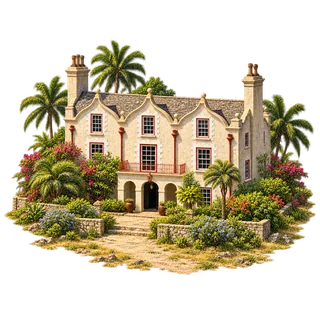
Built in 1658, the great house at St Nicholas Abbey is known for its Jacobean architecture. Curving gables, ornamental chimneys and a later triple-arched portico distinguish its façade. The house is part of Barbados’s plantation history, whose wealth depended on enslaved labour.