nature
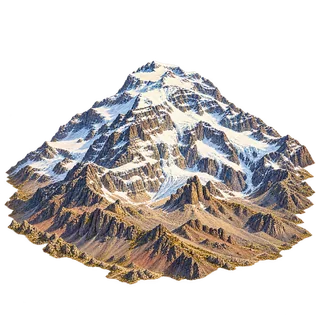
Aconcagua — Summit Massif
Aconcagua is the great mountain protected by Mendoza’s provincial park. Its high rocky faces, glaciers and headwaters form a mountain landscape of immense scale.
Source: www.mendoza.gov.ar
South America
Discover Aconcagua — Summit Massif, Caminito — Street Museum, Casa Rosada — Main Front and more.
Explore 12 illustrated places, read the stories behind them and look closer on the globe.
Explore Argentina on the globe →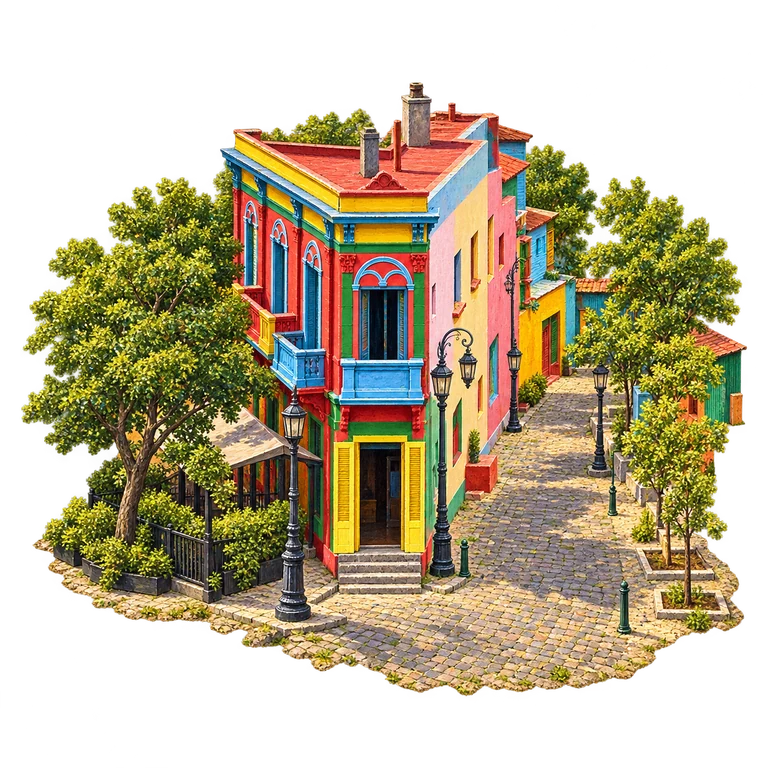
nature
Aconcagua is the great mountain protected by Mendoza’s provincial park. Its high rocky faces, glaciers and headwaters form a mountain landscape of immense scale.
Source: www.mendoza.gov.ar
culture
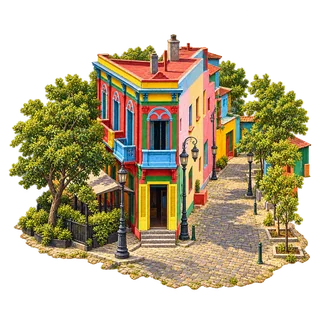
Caminito follows a small route that once held a stream and later a railway. After the railway closed in 1928, the place declined. In 1959, neighbours and artists, including Benito Quinquela Martín, helped revive it as a street museum. Painted sheet-metal conventillos and the cobbled lane give this part of La Boca its vivid architectural character. Its colour is part of a deliberate cultural renewal, not a reason to invent a story about a particular house or resident.
history
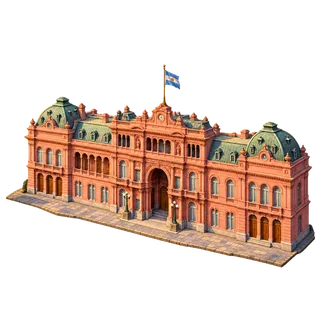
Casa Rosada grew from separate government and post-office buildings. Architect Francisco Tamburini joined them with the large central arch that gives its Balcarce frontage a distinctive shape.
Source: turismo.buenosaires.gob.ar
geology
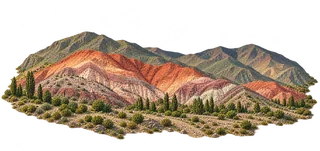
The Cerro de los Siete Colores rises behind Purmamarca in Jujuy’s Quebrada de Humahuaca. Its colours belong to layers of sedimentary rock, exposed across slopes and ridges rather than arranged as seven equal stripes. Their appearance changes with daylight and the season. Looking across the whole profile reveals how folds, erosion and neighbouring slopes make a much more varied landscape than the hill’s familiar name might suggest.
history
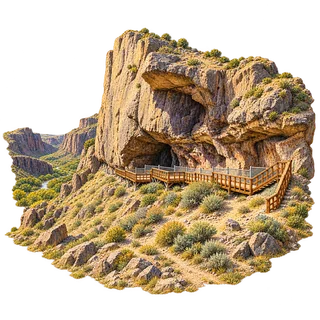
Cueva de las Manos takes its name from the stencilled hands among its rock paintings. Guanacos and hunting scenes also appear in a long sequence of images made by generations of hunter-gatherer communities. Mineral pigments helped turn the shelter’s rock into a lasting record of human presence. The site’s importance lies in that accumulated history; no single invented ceremony or definite modern identity is needed to explain it.
Source: UNESCO World Heritage Centre
landscape
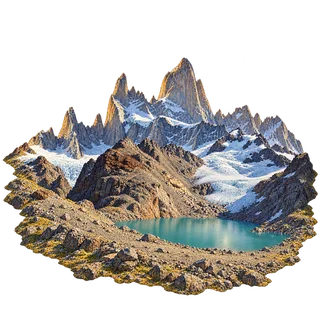
Fitz Roy, also known as Chaltén, belongs to a granite massif in the northern part of Los Glaciares National Park. Its towers and needles stand between the Patagonian steppe to the east and the Southern Patagonian Icefield to the west. From Laguna de los Tres, the massive main tower and narrower neighbouring peaks form a distinctive skyline above scree, ice and a lake held within the mountains’ rocky foreground.
water
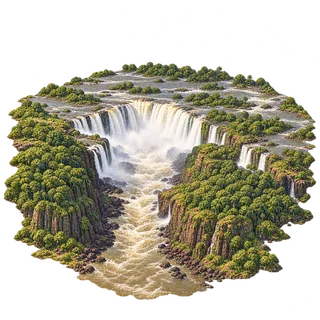
At Garganta del Diablo, the Iguazú River plunges into a deep horseshoe-shaped gorge within a waterfall system shared by Argentina and Brazil. Water, basalt and forest meet closely here. Spray helps keep nearby vegetation humid, linking the river’s force with the Atlantic Forest around it.
fossils
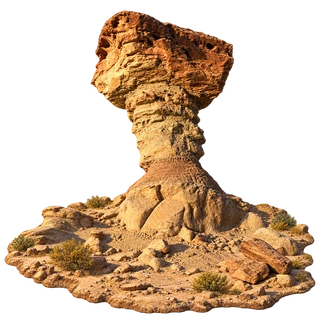
The neighbouring parks of Ischigualasto and Talampaya preserve a major sequence of continental sediments from the Triassic. Their geological formations contain fossils of plants, early dinosaurs and relatives of mammals. Together, the rocks help researchers reconstruct changing land environments and vertebrate life through that period.
Source: UNESCO World Heritage Centre
engineering
Les Éclaireurs Lighthouse was first lit in 1920 on the small islets of the same name in the Beagle Channel. Its tower is modest, but the low surrounding rock makes the navigation light prominent above the water. Solar-powered remote operation now supports its role. The scene is centred on this fixed structure and its actual islet, rather than moving a city landmark onto an invented shoreline.
Source: Instituto Fueguino de Turismo (InFueTur), Tierra del Fuego
architecture
Designed by Alberto Prebisch, the Obelisco was inaugurated in 1936. Its almost 68-metre form is hollow and made from reinforced concrete. It stands at the meeting of major city avenues in Plaza de la República. The monument commemorated four centuries since the first Spanish settlement in the Río de la Plata area; understanding that purpose also means recognising it as a particular twentieth-century account of the city’s history.
water
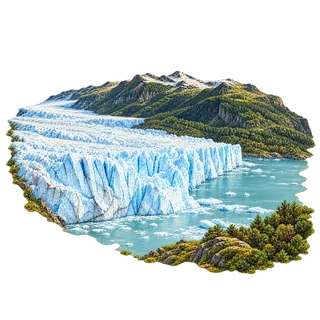
Perito Moreno’s viewing walkways in Los Glaciares National Park offer panoramas from several heights. Looking across the channel from these balconies makes the glacier’s structure easier to read: a crevassed ice surface continues inland behind a steep front, while lake water lies against its edge. This quieter north-face view focuses on that relationship between ice, water and surrounding land, rather than repeating a dramatic calving moment.
architecture
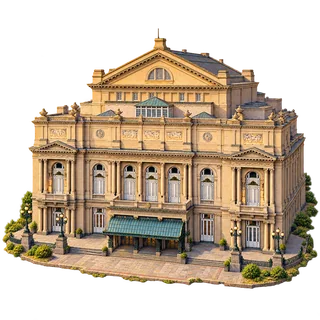
The present Teatro Colón opened in 1908 with a performance of Aida. Its work extends beyond the auditorium: the theatre has its own artistic ensembles and production workshops, supporting the many crafts needed to bring opera, ballet and concert programmes to the stage. The exterior marks the public face of a building whose cultural activity depends on performers, technicians and makers working together.
Source: Teatro Colón
Read more about Argentina · Choose another country or territory · How to play USURPR