earth
Atlas Mountains
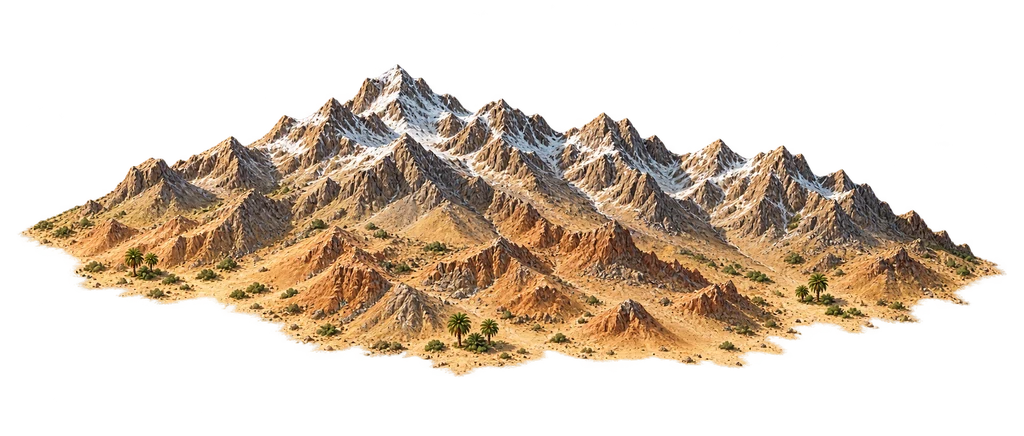
The Atlas Mountains extend across northwestern Africa. Their high ridges, dry plateaus and valleys form a varied mountain landscape.
Source: Wikidata
Northern Africa
Discover Atlas Mountains, Beni Hammad — Surviving Minaret, Ketchaoua Mosque and more.
Explore 6 illustrated places, read the stories behind them and look closer on the globe.
Explore Algeria on the globe →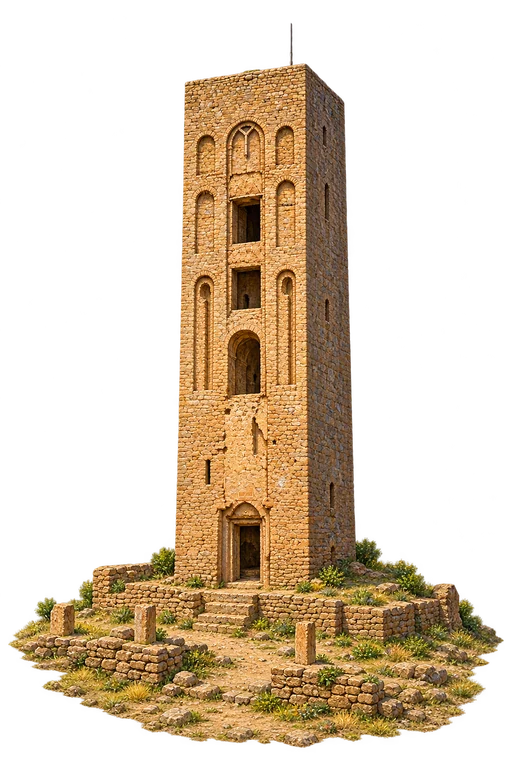
earth
The Atlas Mountains extend across northwestern Africa. Their high ridges, dry plateaus and valleys form a varied mountain landscape.
Source: Wikidata
archaeology
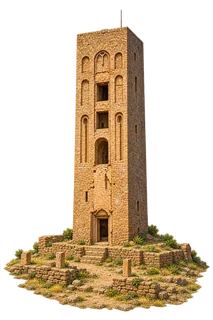
Al Qal’a of Beni Hammad was founded in 1007 as the first capital of the Hammadid emirs. Its archaeological remains include palaces and the Great Mosque, whose surviving minaret is a particularly clear landmark. The square shaft retains recessed decorative patterns and openings even though much of the surrounding building is ruined. The tower makes it possible to notice architectural ideas that travelled across the medieval Maghreb, while the low remains around it recall that a great city once occupied this mountain setting.
Source: UNESCO World Heritage Centre
architecture
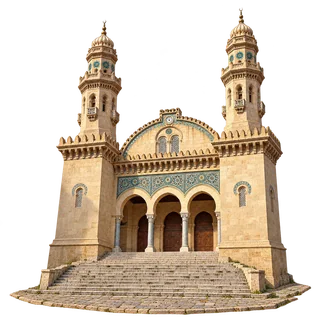
Ketchaoua stands in the lower Casbah of Algiers, where steep streets meet a busy historic quarter. Its facade is organised around twin towers and a three-arched entrance porch reached by broad steps. The building is listed in Algeria’s protected cultural heritage, and a modern restoration programme has addressed its fabric. Looking at the exterior offers a way to notice craftsmanship and the changing history of the city while respecting the mosque as a place of worship.
Source: Algerian Ministry of Culture
architecture
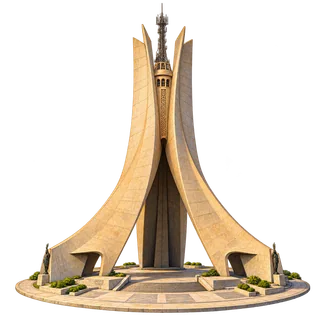
Maqam Echahid is a memorial associated with Algeria’s struggle for independence. Its large curved concrete forms make it one of Algiers’ most recognisable modern landmarks. The monument was inaugurated in 1982, twenty years after independence. Rather than copying a traditional building, its designers used a sculptural form whose broad feet narrow as they rise. Seen as a memorial, the architecture invites reflection on loss, national memory and the ways a city chooses to remember its past.
Source: Algerian Embassy Lisbon / APS
archaeology
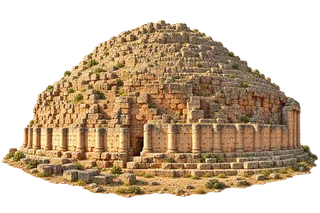
The Royal Mauretanian Mausoleum is a distinct part of the Tipasa World Heritage property, separate from the coastal archaeological parks. Its circular funerary form combines a local architectural tradition with influences from the wider Mediterranean world. The stepped stone covering and engaged columns give the monument a very different silhouette from a Roman theatre or city gate. The surviving fabric invites questions about how North African communities expressed power, memory and burial through architecture.
Source: UNESCO World Heritage Centre
archaeology
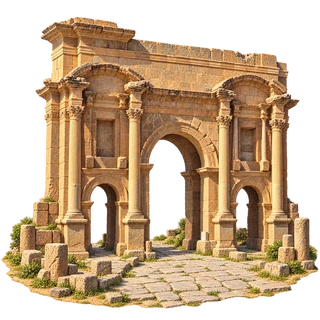
Founded under Emperor Trajan in 100 CE, Timgad stood on the northern slopes of the Aurès mountains. Its planned enclosure and perpendicular main streets, the cardo and decumanus, show a Roman approach to organising urban space. The ruins preserve that underlying geometry.
Source: UNESCO World Heritage Centre
Read more about Algeria · Choose another country or territory · How to play USURPR